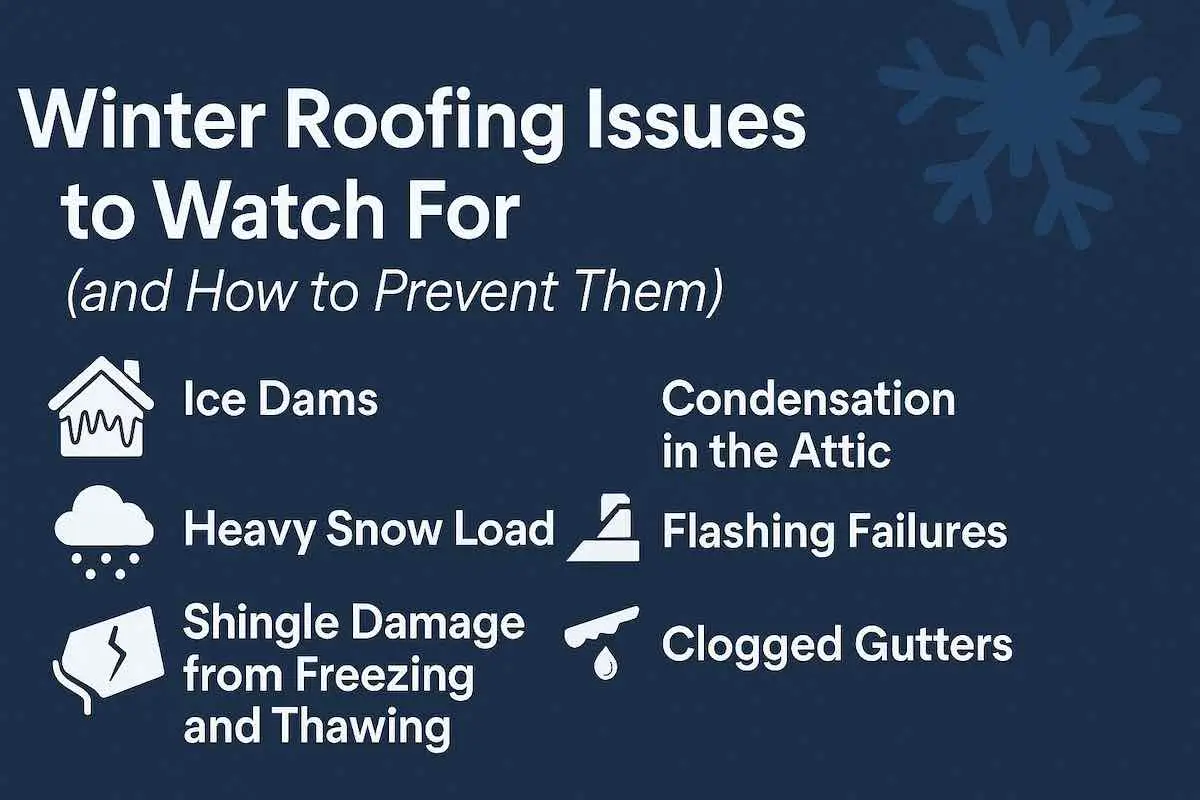
Winter in Indiana can be unpredictable, and your roof often takes the biggest hit. From freezing temperatures to heavy snow and rapid temperature swings, even small issues can turn into major problems if they’re not caught early. The good news is that most winter roofing concerns are preventable with a little awareness and routine maintenance.
Here are the top winter roofing issues homeowners should watch for — and how to stay ahead of them.
1. Ice Dams
Ice dams form when heat escapes from inside your home, warms the roof, and causes snow to melt. As that melted snow reaches the colder edge of the roof, it refreezes and forms a ridge of ice that traps water behind it. That trapped water can seep under your shingles and eventually into your home.
How to Prevent Ice Dams:
- Improve attic insulation to reduce heat loss
- Ensure your attic has proper ventilation
- Keep gutters clean so melted snow can drain
- Use a roof rake to remove excess snow after storms
2. Condensation in the Attic
When warm indoor air reaches the cold underside of your roof, condensation forms. Over time, this can lead to mold, mildew, wood damage, and roofing deterioration — especially during long stretches of cold Indiana weather.
How to Prevent Condensation:
- Ensure attic vents are open and functioning
- Seal gaps where warm air escapes into the attic
- Add insulation to maintain a consistent temperature
3. Heavy Snow Load
Snow can become extremely heavy, particularly if it accumulates over several storms or mixes with ice. A roof under too much stress may sag, crack, or develop leaks.
How to Protect Your Roof:
- Use a roof rake to safely remove snow from the ground
- Have your roof inspected if you notice sagging or creaking
- Strengthen structural areas before winter when possible
4. Flashing Issues
Flashing around chimneys, skylights, and vents expands and contracts during temperature changes. Over time, this can loosen seals and create gaps where water can sneak in — a common source of winter leaks for Indiana homeowners.
How to Prevent Flashing Leaks:
- Inspect flashing each fall
- Schedule a professional check after major storms
- Repair or replace damaged flashing promptly
5. Shingle Damage From Freeze-Thaw Cycles
Indiana winters often involve quick shifts between freezing and thawing. This cycle can weaken shingles, causing them to crack, curl, or loosen. Once shingles are compromised, water has a direct path into the roof deck.
Warning Signs:
- Missing shingles
- Excess granules in gutters
- Visible curling or cracking
How to Prevent Shingle Issues:
- Fix minor damage before winter begins
- Get a roof inspection after major weather events
- Replace aging shingles that are nearing the end of their lifespan
6. Clogged Gutters
If gutters are packed with leaves or ice, melting snow has nowhere to go. Water backs up under the shingles and can lead to leaks, siding damage, or even foundation issues.
How to Prevent Gutter Problems:
- Clean gutters thoroughly before the first snow
- Install gutter guards to keep debris out
- Make sure downspouts are clear and draining properly
Stay Ahead of Winter Roofing Problems With ACE Construction & Remodeling
Indiana winters can be tough, but your home doesn’t have to suffer. A well-maintained roof is your first line of defense against leaks, structural damage, and expensive repairs. If you notice any warning signs — or if you simply want peace of mind — ACE Construction & Remodeling is here to help with inspections, repairs, and winter-ready roofing solutions.