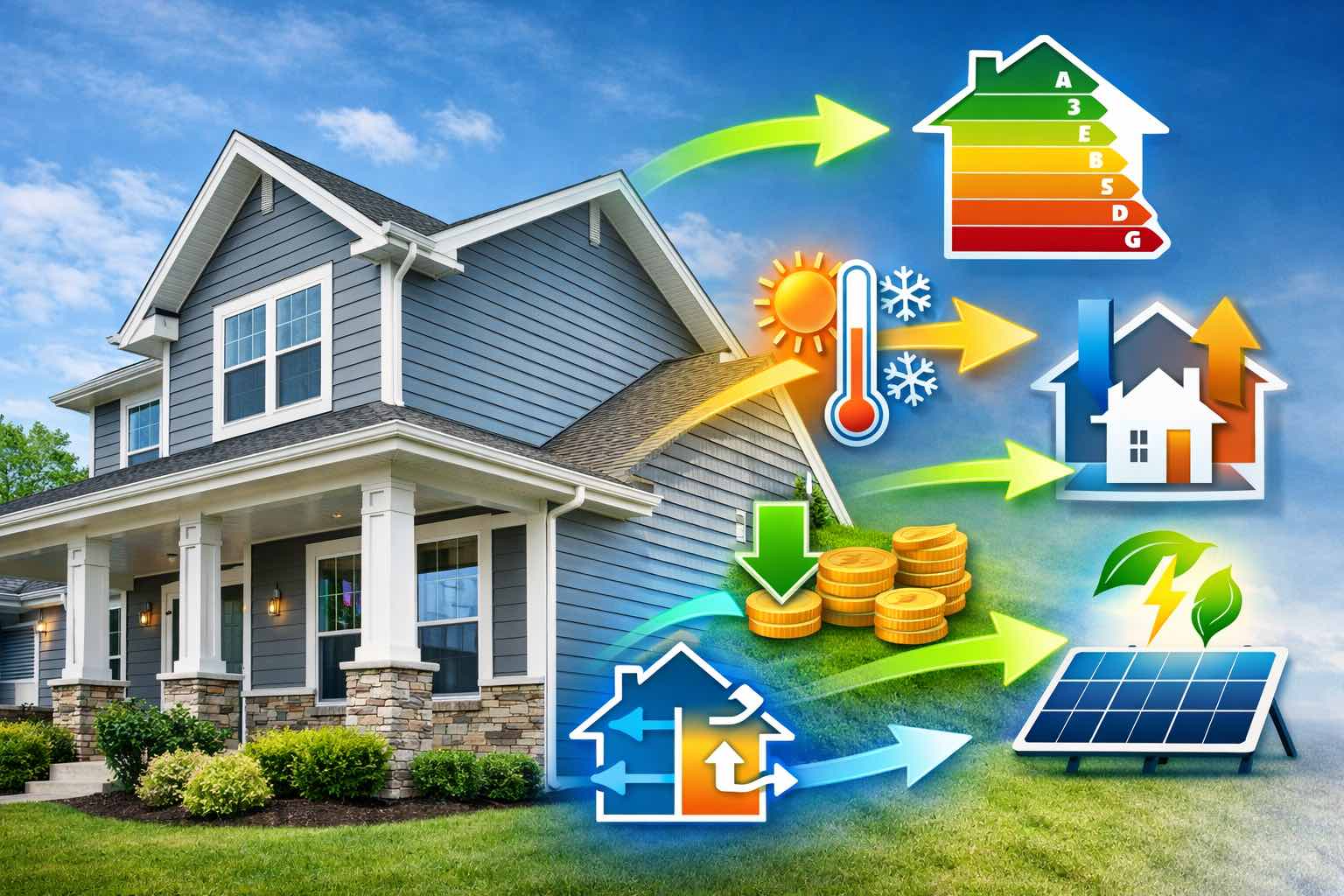
Your home’s exterior does more than create curb appeal — it plays a major role in how efficiently your home retains heat in the winter and stays cool in the summer. If energy bills keep climbing, your siding could be part of the problem. Upgrading to new siding is one of the most effective ways to improve insulation, reduce air leaks, and create a more comfortable indoor environment year-round.
Old or Damaged Siding Allows Energy Loss
Over time, siding can crack, warp, loosen, or pull away from the structure of your home. Even small gaps allow outside air to enter and conditioned air to escape. That forces your HVAC system to work harder and run longer cycles.
Common energy-wasting issues include cracked panels, gaps at seams and corners, deteriorated caulking, moisture intrusion, and failing house wrap beneath siding. When these problems go unchecked, you’re essentially heating and cooling the outdoors.
Modern Siding Adds Insulation Value
Today’s siding systems are engineered for performance. Many products now include built-in insulation or are installed with insulated backing boards that increase your home’s R-value (thermal resistance).
Options like insulated vinyl siding or fiber cement paired with rigid foam board create a continuous thermal barrier around your home. This reduces thermal bridging — the process where heat escapes through framing and wall studs.
The result is more consistent indoor temperatures, reduced drafts, lower heating and cooling costs, and less strain on your HVAC system.
Improved Moisture & Air Control
Energy efficiency isn’t just about insulation — it’s also about controlling air and moisture. New siding installations typically include updated house wrap and moisture barriers that prevent air infiltration and water intrusion.
When air leakage is minimized, conditioned air stays inside, humidity levels remain more stable, mold risk decreases, and overall comfort improves. A properly installed siding system acts as a protective shell that keeps outside elements where they belong.
Energy Savings Add Up Over Time
While new siding is an investment, it often delivers measurable long-term savings. Reduced HVAC usage means lower monthly utility bills and an extended lifespan for your heating and cooling equipment.
Many homeowners also notice increased resale value, improved comfort, and fewer maintenance issues after upgrading their siding. When combined with proper attic insulation and ventilation, siding replacement can significantly improve overall home performance.
Choosing the Right Siding for Efficiency
Not all siding performs the same. The best option depends on climate, home design, and budget. Insulated vinyl siding, engineered wood, and fiber cement paired with proper underlayment all offer strong performance when installed correctly.
Professional installation is critical. Even the best materials won’t deliver results if they aren’t sealed and secured properly.
Upgrade Your Home’s Efficiency with ACE Construction
New siding does more than refresh your home’s appearance — it strengthens its ability to retain energy, control moisture, and reduce long-term operating costs. If your current siding is aging, damaged, or outdated, upgrading could be one of the smartest improvements you can make.
Schedule your free consultation with ACE Construction today and let our team help you create a stronger, more energy-efficient exterior built to last.