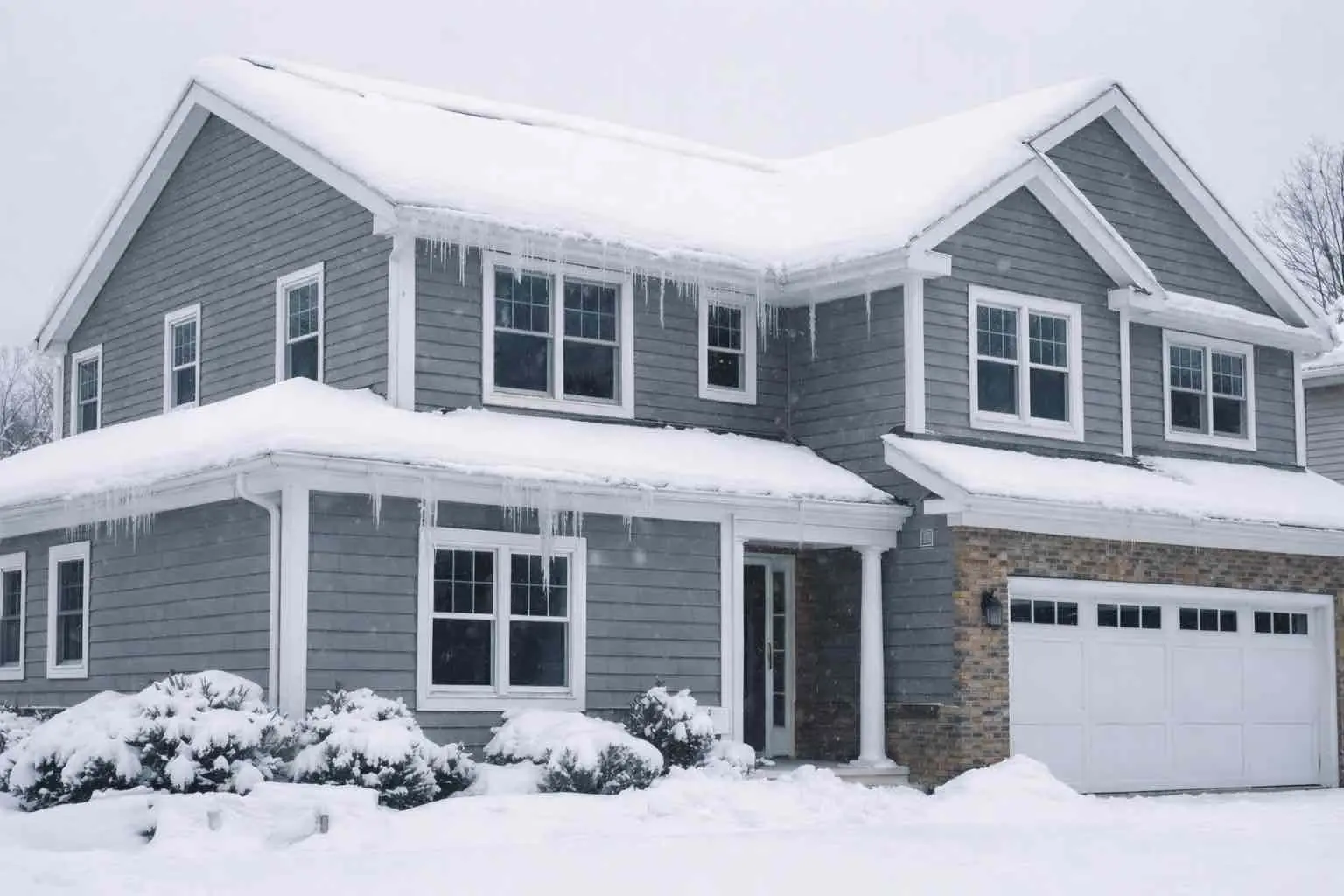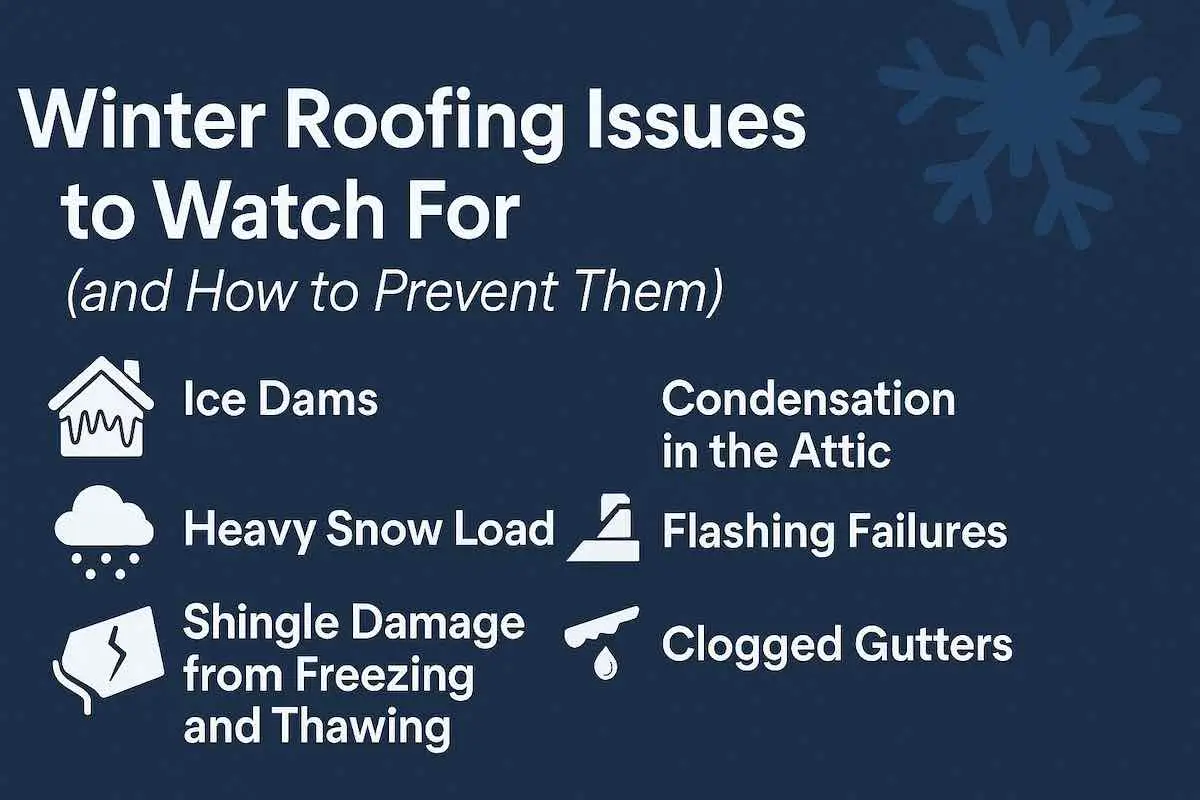
Winter weather can be tough on your home’s exterior. Snow, ice, freezing temperatures, and constant freeze-thaw cycles quietly take a toll on roofing materials, siding, and structural components. The challenge is that winter damage doesn’t always announce itself right away — small issues often go unnoticed until they become expensive repairs.
Knowing what to look for early can help you protect your home and avoid bigger problems down the road.
Check for Shingle Changes on Your Roof
Your roof is your home’s first line of defense, and it often shows the earliest signs of winter stress.
Watch for:
- Missing, cracked, or curling shingles
- Shingles that appear loose or uneven
- Granules collecting in gutters or at the base of downspouts
Freeze-thaw cycles can weaken shingles over time, especially on older roofs. Even minor damage can allow moisture to seep underneath and cause leaks.
Look for Ice Dam Evidence
Ice dams don’t just cause immediate problems — they can leave behind lasting damage once the ice melts.
Signs of ice dam damage include:
- Water stains along roof edges or ceilings
- Peeling paint or bubbling drywall near exterior walls
- Warped or deteriorating fascia boards
If ice dams formed during winter, it’s important to inspect the roof once conditions improve.
Inspect Flashing and Roof Penetrations
Flashing around chimneys, vents, skylights, and valleys is especially vulnerable to temperature changes. As metal expands and contracts, seals can loosen.
Early warning signs:
- Gaps or lifting around flashing
- Rust or corrosion
- Damp spots near chimneys or vents inside the home
Flashing issues are a common source of winter leaks and should be addressed promptly.
Examine Siding for Cracks or Gaps
Siding materials expand and contract with temperature swings. Over time, this movement can cause cracks, separation, or warping.
Look for:
- Cracked or split siding panels
- Gaps at seams or corners
- Siding that appears loose or bowed
Even small openings can allow moisture behind the siding, leading to hidden damage beneath the surface.
Check Trim, Fascia, and Soffits
Exterior trim often takes a beating during winter due to ice buildup and moisture exposure.
Warning signs include:
- Peeling or blistering paint
- Soft or rotting wood
- Sagging soffits or loose fascia boards
Damage in these areas can allow water to reach your roof structure and attic.
Pay Attention to Gutters and Downspouts
Winter debris, ice, and snow can clog gutters and prevent proper drainage. When water backs up, it can damage roofing, siding, and foundations.
Inspect for:
- Sagging or detached gutters
- Cracks or leaks in gutter sections
- Downspouts pulling away from the home
Clear, properly functioning gutters are critical for preventing winter-related water damage.
Watch for Interior Warning Signs
Sometimes the first signs of exterior damage show up inside your home.
Be alert to:
- Water stains on ceilings or walls
- Drafts near windows or doors
- Musty odors in attics or upper floors
Interior symptoms often point to exterior issues that need attention.
Why Early Detection Matters
Winter damage rarely fixes itself. Small cracks, gaps, or loose materials tend to worsen as temperatures continue to fluctuate. Catching issues early helps prevent:
- Costly repairs
- Structural damage
- Mold and moisture problems
- Reduced energy efficiency
Protect Your Home Before Damage Gets Worse
A post-winter inspection is one of the smartest ways to protect your investment. Identifying and addressing early signs of damage keeps your roof and exterior performing as they should — and helps you avoid unexpected repair bills later.