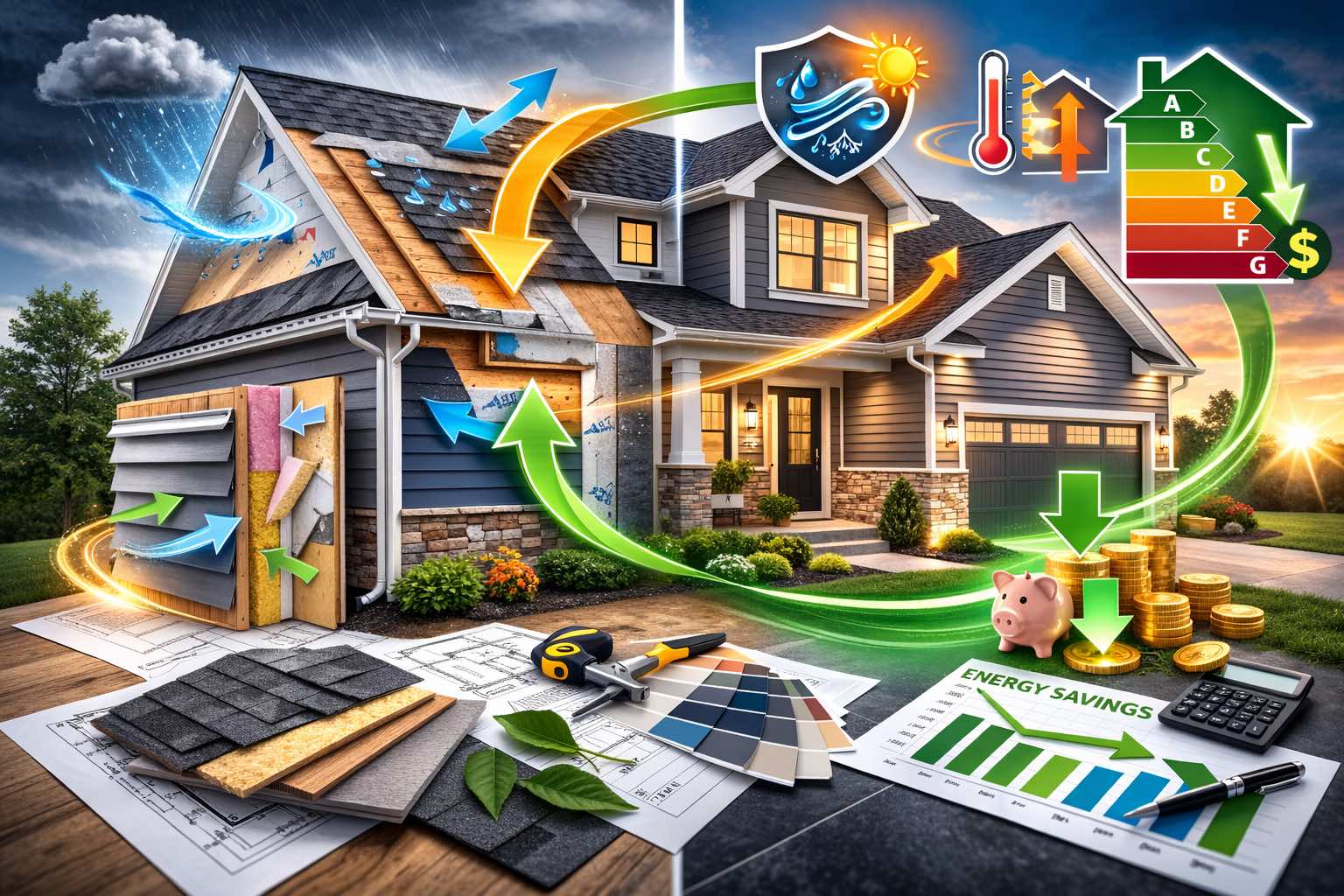
Exterior renovations are one of the most impactful ways to improve your home’s appearance, efficiency, and long-term durability. Whether you’re planning to update aging materials, improve weather protection, or increase property value, a well-planned exterior renovation ensures that every component of your home’s outer structure works together properly.
Many homeowners focus on a single upgrade like siding or roofing, but the most successful renovations take a comprehensive approach. Reviewing the entire exterior system—from roofing and siding to drainage and windows—helps prevent future issues and maximizes the return on your investment.
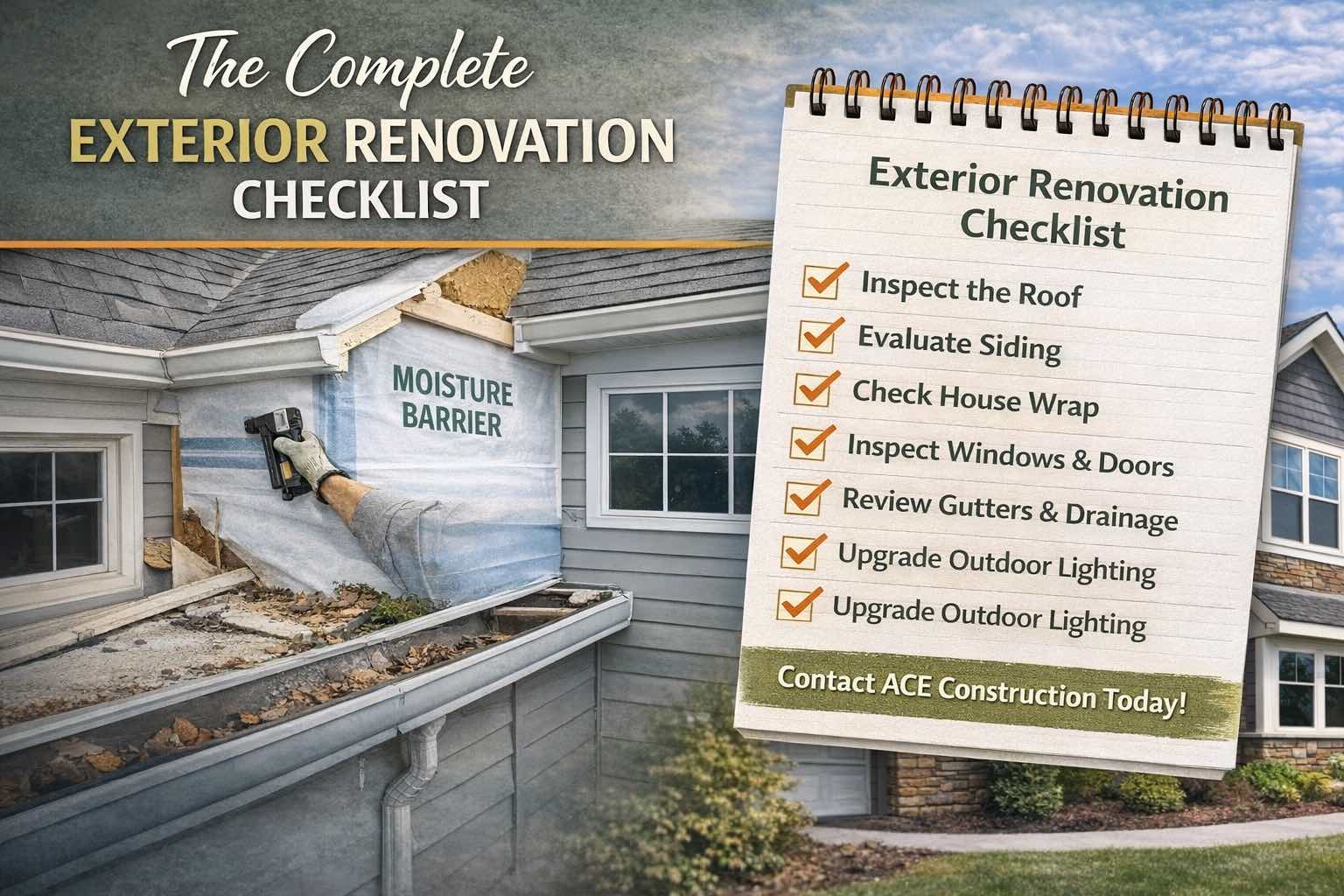
Below is a complete checklist to help guide your exterior renovation project.
Inspect the Roof
The roof is the first line of defense against weather. Before beginning any exterior renovation, it’s important to evaluate the condition of your roofing system.
Look for signs such as:
• Missing or damaged shingles
• Sagging rooflines
• Flashing damage around chimneys and vents
• Signs of leaks in the attic
• Aging roofing materials nearing the end of their lifespan
If the roof needs replacement or repair, it is often best to address it before installing new siding or exterior features.
Evaluate the Siding Condition
Siding protects your home’s structure while also defining its visual character. During an exterior renovation, inspect the siding carefully for issues such as warping, cracking, fading, or moisture damage.
Consider upgrading siding materials if you notice:
• Rotting wood or deteriorating panels
• Loose or missing sections
• Excessive fading or discoloration
• Signs of moisture infiltration behind panels
New siding not only improves curb appeal but also strengthens the protective barrier around your home.
Check House Wrap and Moisture Protection
Behind the siding, proper moisture protection is critical. Modern exterior renovations should include updated house wrap and flashing systems to prevent water infiltration.
Key areas to review include:
• House wrap installation and condition
• Window and door flashing
• Sealed seams and transitions
• Weather-resistant barriers around penetrations
These elements work together to protect the structural components of the home from water damage.
Inspect Windows and Doors
Windows and exterior doors play a major role in energy efficiency and weather protection. Outdated or poorly sealed units can allow drafts, moisture, and energy loss.
During a renovation, check for:
• Broken seals or condensation between panes
• Drafts around frames
• Difficulty opening or closing windows
• Deteriorating trim or framing
Replacing older windows and doors during an exterior renovation can significantly improve comfort and energy efficiency.
Review Gutters and Drainage Systems
Water management is essential to protecting your home’s foundation and exterior structure. Gutters and downspouts should direct water safely away from the property.
Important items to review include:
• Properly functioning gutters
• Secure gutter attachment to fascia
• Downspouts directing water away from the foundation
• Adequate drainage away from the home
If gutters are clogged, damaged, or undersized, replacing them during an exterior renovation can prevent costly water issues later.
Examine Fascia and Soffits
Fascia and soffits are often overlooked but play an important role in both ventilation and moisture control. These components support the gutter system and help protect the roof structure.
Inspect for:
• Rotting or peeling wood
• Signs of insect damage
• Poor attic ventilation
• Loose or damaged panels
Updating fascia and soffits can improve airflow and extend the lifespan of the roof system.
Evaluate Exterior Trim and Architectural Details
Exterior trim elements help define the look of your home while also protecting seams and transitions between building materials.
During an exterior renovation, review trim for:
• Cracked or rotting wood
• Faded or peeling paint
• Loose corner boards or decorative features
Upgrading trim materials can refresh the appearance of the home and provide better weather resistance.
Upgrade Outdoor Lighting and Electrical
Exterior renovations also create the perfect opportunity to improve lighting and electrical features around the home.
Consider adding or upgrading:
• Entryway lighting
• Garage lighting
• Landscape lighting
• Security lighting
• Outdoor outlets
These upgrades improve safety, functionality, and nighttime curb appeal.
Improve Landscaping and Drainage Around the Home
The final step in a successful exterior renovation is ensuring the surrounding landscape supports proper water flow and complements the updated structure.
Key improvements may include:
• Regrading soil away from the foundation
• Installing drainage systems if needed
• Updating walkways or patios
• Adding landscaping that enhances the home’s appearance
Well-planned landscaping helps protect the home while completing the overall design.
Planning Your Exterior Renovation Project
Exterior renovations involve many interconnected components. Taking a full-system approach ensures that roofing, siding, moisture protection, drainage, and architectural elements all work together to protect the home.
At ACE Construction, we help homeowners plan and complete exterior renovation projects with careful attention to structural protection, weather resistance, and long-term performance. From siding and roofing upgrades to moisture protection and exterior improvements, our team focuses on building durable solutions that enhance both the beauty and functionality of your home.
If you’re considering an exterior renovation, contact ACE Construction to schedule a consultation and start planning improvements that will protect and elevate your home for years to come.